
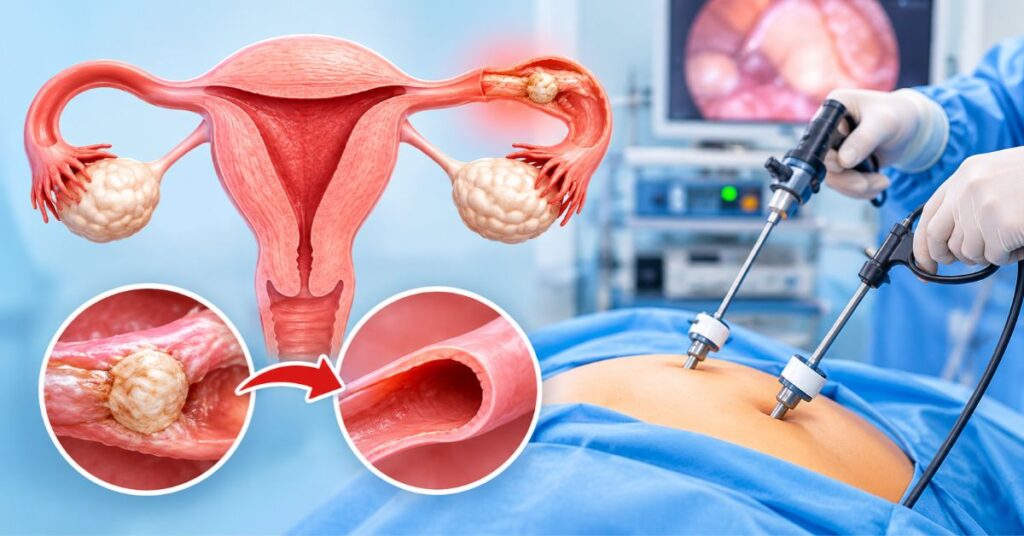
Blocked fallopian tubes are a common cause of female infertility. The fallopian tubes play an important role in natural conception by allowing the egg and sperm to meet. When one or both tubes become blocked, fertilisation and pregnancy may become difficult. Depending on the location and severity of the blockage, laparoscopic surgery may be considered as a treatment option.
What Causes Blocked Fallopian Tubes?
Several conditions can lead to fallopian tube blockage, including:
- Pelvic inflammatory disease (PID)
- Previous pelvic or abdominal surgeries
- Endometriosis
- Pelvic adhesions (scar tissue)
- Previous ectopic pregnancy
- Infections affecting the reproductive organs
What Are the Symptoms of Blocked Fallopian Tubes?
Many women with blocked fallopian tubes do not experience noticeable symptoms. However, some may have:
- Difficulty conceiving
- Pelvic or lower abdominal pain
- Painful menstrual periods
- Unusual vaginal discharge in cases of infection
- A history of ectopic pregnancy
Infertility may sometimes be the first indication of a fallopian tube problem.
How Is Fallopian Tube Blockage Diagnosed?
A gynaecologist or fertility specialist may recommend different tests to identify the blockage, such as:
- Hysterosalpingography (HSG): An imaging test used to examine the uterus and fallopian tubes.
- Ultrasound: Helps evaluate the reproductive organs and identify certain abnormalities.
- Laparoscopy: A minimally invasive surgical procedure that allows direct examination of the pelvic organs and fallopian tubes.
Can Laparoscopic Surgery Treat Blocked Fallopian Tubes?
Yes, laparoscopic surgery may help treat certain types of fallopian tube blockage. The procedure involves making small incisions in the abdomen and inserting a camera and specialised surgical instruments.
Depending on the cause and location of the blockage, the surgeon may perform:
- Adhesiolysis: Removal of scar tissue surrounding the fallopian tubes.
- Fimbrioplasty: Repair of the finger-like structures at the end of the fallopian tube.
- Tubal Cannulation: Opening certain blockages near the uterus using specialised instruments.
- Salpingostomy: Creating an opening in the fallopian tube to treat certain types of distal blockage.
The suitability of these procedures depends on the condition of the tubes and the extent of damage.
Can You Get Pregnant After Laparoscopic Surgery?
Pregnancy may be possible after successful treatment of fallopian tube blockage. However, the chances depend on several factors, including:
- Whether one or both fallopian tubes are affected
- The extent of tubal damage
- Age and overall reproductive health
- Egg quality and ovarian reserve
- Male partner’s fertility health
It is important to understand that surgery does not guarantee pregnancy. Women with severe tubal damage may be advised to consider assisted reproductive options such as IVF.
When Should You Consult a Fertility Specialist?
If you have been trying to conceive without success, have a history of pelvic infections, endometriosis, or previous ectopic pregnancy, consider consulting a fertility specialist. Early evaluation can help identify the underlying cause and guide suitable treatment.
Consult a Laparoscopic Surgeon in Indore
Blocked fallopian tubes do not always mean that natural pregnancy is impossible. With proper diagnosis and an individualised treatment plan, suitable options can be explored.
Consult an experienced laparoscopic surgeon in Indore or fertility specialist to understand whether laparoscopic treatment is appropriate for your condition. A detailed fertility evaluation can help determine the next steps towards pregnancy planning.